Open public circulation
Patients, visitors and vendors share corridors, lobbies and waiting areas with staff.

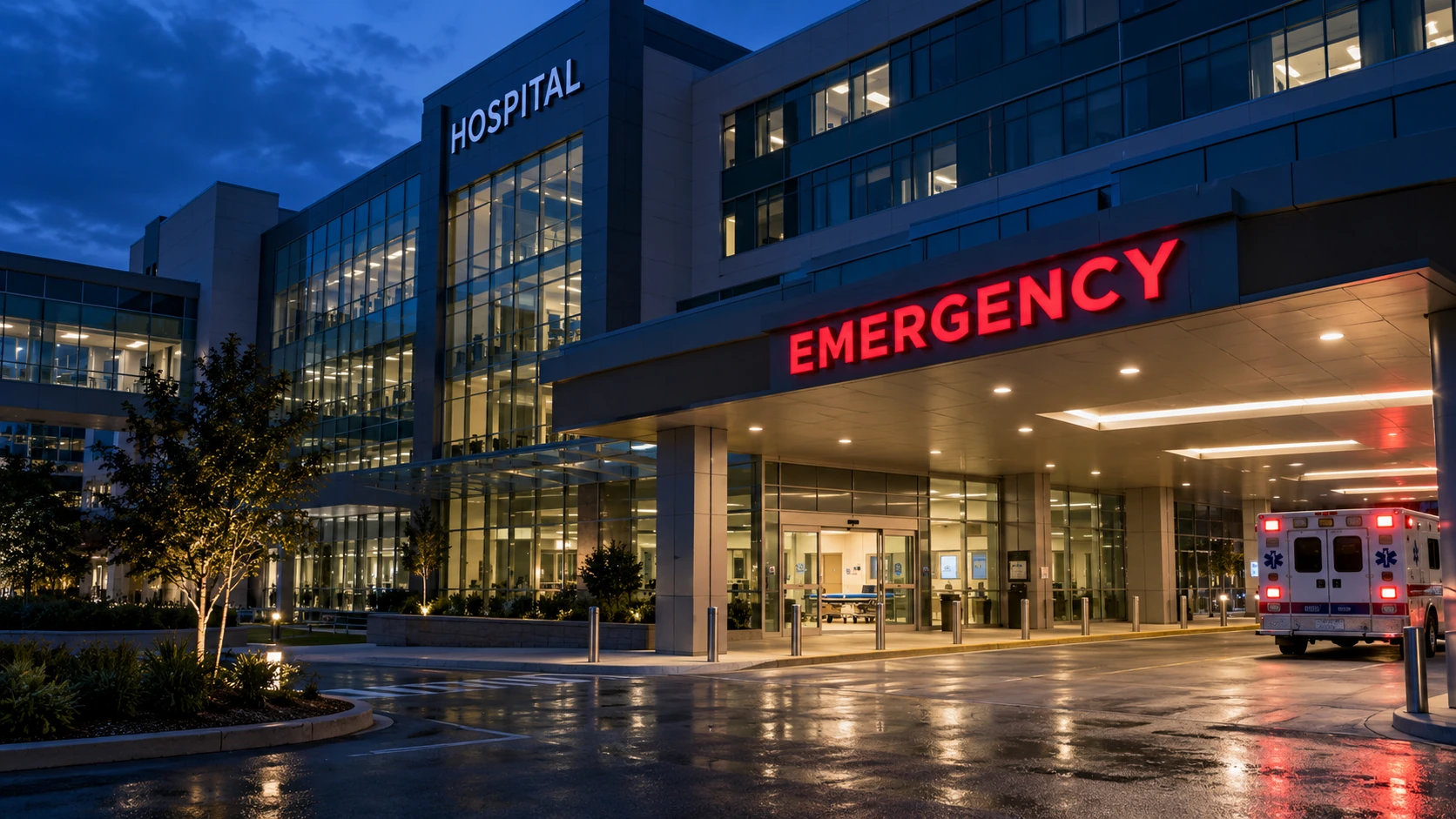
HEALTHCARE & LIFE SAFETY / PHYSICAL SECURITY
Evaluate public access, patient-facing operations and restricted clinical spaces without losing sight of care delivery.
Hospitals and medical campuses are open by design, yet contain areas where access must be carefully controlled. Emergency departments, visitor routes, clinical corridors and service entrances introduce different pressures on the same security program. Phantom PenTest assesses whether physical safeguards and staff procedures hold up in real operating conditions.
OPERATIONAL REALITIES
Risk looks different at every facility. These are the practical conditions our assessment considers in healthcare facilities.
Patients, visitors and vendors share corridors, lobbies and waiting areas with staff.
Fast-moving care, frequent arrivals and complex handoffs can challenge routine screening.
Pharmacies, laboratories, infant care units and staff-only areas require consistent control.
Overnight activity, contractor work and rapid shift changes affect how procedures are followed.
WHAT WE ASSESS
We evaluate how physical barriers, technology, procedures and people work together. Scope is agreed in advance, testing is controlled, and findings are focused on exposures that matter to the facility.
Balance a welcoming environment with meaningful protection for people and sensitive areas.
Reception, check-in, public circulation and visitor-badge procedures.
Access permissions, door status and separation of sensitive spaces.
Practical controls around highly active entrances and adjacent staff access.
Camera coverage, duress alarms and intrusion notification pathways.
Site-specific prevention, reporting and security response procedures.
Shift access, vendor escorts, deliveries and emergency access needs.
ILLUSTRATIVE TEST SCENARIO
Authorized. Controlled. Operationally aware.A carefully coordinated scenario might test whether someone entering a public lobby can progress toward staff-only spaces while preserving patient privacy, clinical operations and emergency egress.
PHANTOM'S METHODOLOGY
We combine assessment, evidence and leadership-ready reporting—without treating every property like the same facility.
Confirm objectives, authorized areas, exclusions, safety limitations and the decisions your team needs to make.
Review site controls and procedures; perform controlled physical penetration testing only where expressly permitted.
Organize supporting evidence, identify probable consequences and recommend realistic remediation actions.
OUR PROPRIETARY ADVANTAGE
A New Dimension in Physical Security. Developed exclusively by Phantom PenTest, Penetrate360 brings entrances, emergency departments, visitor routes, restricted areas and security controls into a clearer picture of hospital risk. Understand how weaknesses could affect people and sensitive spaces—and which improvements can better protect patients, staff and visitors.
Discover the Penetrate360 Advantage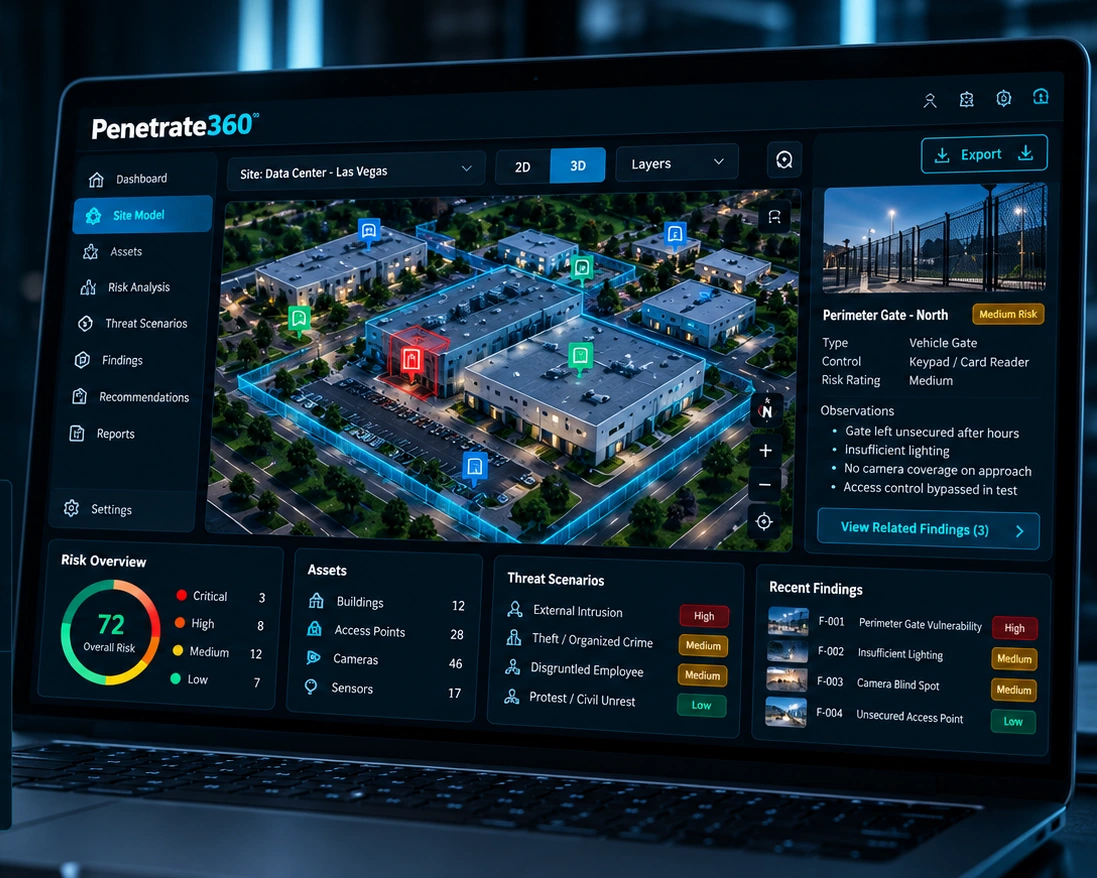
WHAT YOUR ORGANIZATION RECEIVES
Leadership gets an assessment built for decisions, not a folder of unprioritized observations.
An accessible overview of the security exposures that deserve attention.
A discussion of key findings, operating constraints and improvement priorities.
Supporting observations, evidence and recommendations organized by risk.
Sequenced next steps to strengthen the facility's physical security posture.
COMMON QUESTIONS
Start with a defined scope. We'll help determine which parts of the environment merit the closest review.
Assessments are planned with facility leadership to respect clinical priorities, privacy rules and critical operations. High-risk or sensitive spaces require explicit authorization.
Those environments can be included when authorized and appropriate. We examine the controls and procedures around them without interfering with care.
Our focus is physical security effectiveness. We do not present the assessment as a substitute for clinical, accreditation or regulatory compliance reviews.
DISCUSS YOUR FACILITY
Talk with Phantom PenTest about a professionally scoped, authorized physical security assessment for your healthcare facilities environment.