Camera coverage & image usefulness
Review camera placement, line of sight, lighting conditions and whether footage supports the security objective at each critical point.

CCTV / ALARMS / PHYSICAL SECURITY TECHNOLOGY
Installed is not the same as effective.
We assess how cameras, alarms, sensors and integrated security technologies actually contribute to detection, verification and response at your facility.
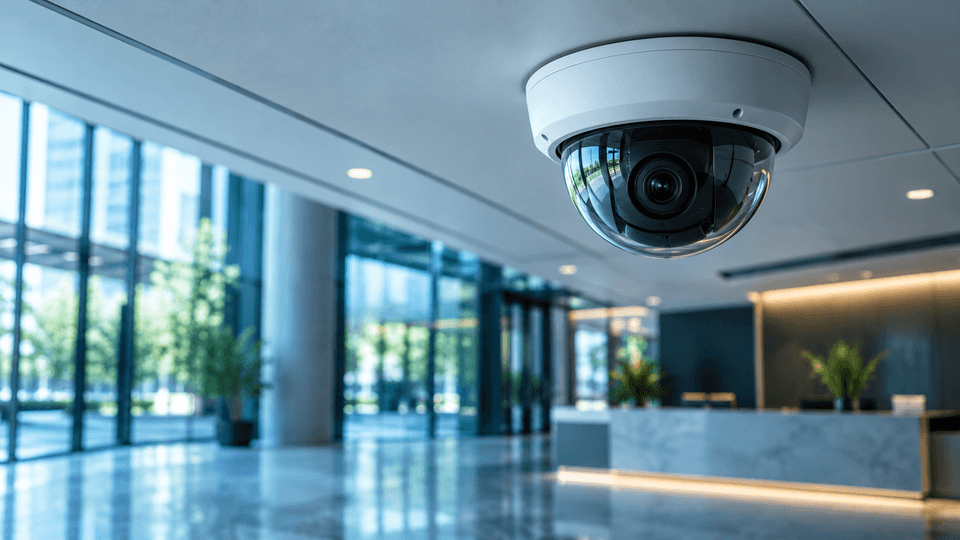
THE OBJECTIVE
The presence of equipment is not proof of protection. Phantom PenTest examines sightlines, environmental conditions, alert workflows and the handoffs between technology and people. The objective is to identify blind spots and operational gaps—not sell replacement equipment.
Our findings focus on the interaction among people, processes, facilities and physical security technology. They explain why observed gaps matter and how the organization can respond.
This assessment is useful for facilities that rely on cameras, physical intrusion detection or alarm monitoring to protect people and restricted areas. It helps when coverage is uncertain, operating conditions have changed or leadership needs to understand whether installed systems support the intended security objective.
ASSESSMENT SCOPE
Every engagement is tailored to the facility, the threats that matter and the boundaries the client authorizes.
Review camera placement, line of sight, lighting conditions and whether footage supports the security objective at each critical point.
Assess physical detection coverage, alarm zones and practical alert handling under normal and after-hours conditions.
Examine how access events, CCTV, alarms and monitoring workflows connect to create an actionable response.
Review how operators validate alerts, escalate events, document actions and know when to dispatch or notify personnel.
Consider shadows, glare, weather and other conditions affecting image capture and sensor performance.
Examine inspection routines, failure reporting, physical power dependencies and process for correcting nonfunctional equipment.
WHY IT MATTERS
These examples illustrate common physical security challenges. They are not findings from an actual Phantom client assessment.
Wide coverage can hide a lack of usable evidence at key doors, gates or transaction points.
Without timely acknowledgement and verification, a detection event may not result in meaningful action.
Integrated workflows may be missing even where each individual product is functioning.
THE PENETRATE360 ADVANTAGE
Penetrate360 is Phantom PenTest’s proprietary visual assessment platform. It helps turn complex facility conditions, security assets and threat scenarios into a clearer understanding of risk—so leadership can see where to focus improvements.
Discover Penetrate360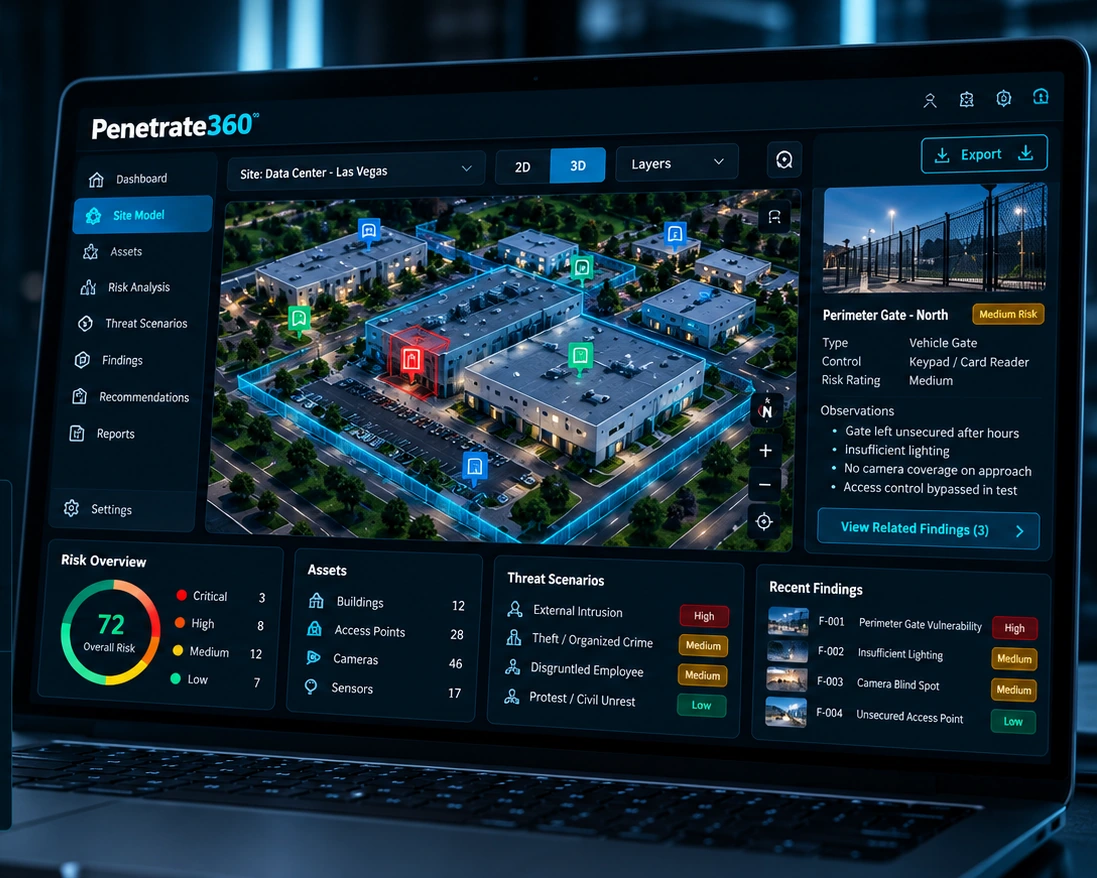
YOUR OUTCOME
Clear, risk-ranked findings that connect physical technology limitations with their operational consequences, plus recommendations focused on coverage, monitoring, resilience and response effectiveness.
HOW AN ENGAGEMENT WORKS
The review activities and access requirements are agreed with your organization before work begins.
Identify priority entrances, assets and operating conditions. Agree whether the review covers daytime or nighttime performance, alarm handling, monitoring or system dependencies.
Review placement, coverage and approved workflows alongside lighting and environmental conditions. Coordinate any functional checks with the client and responsible system personnel.
Explain how observed limitations affect detection, verification and response. Provide evidence, risk-ranked recommendations and a roadmap for improvement.
COMMON QUESTIONS
No. Phantom PenTest focuses on physical security system effectiveness and operational integration, not network vulnerability scanning or cyber exploitation.
The assessment is independent consulting. Recommendations may identify improvements, but Phantom does not use an assessment to sell security products or equipment.
Depending on the approved scope, coverage may be reviewed under different lighting or operational conditions to understand practical limitations.
Available camera and sensor layouts, the intended purpose of each critical device, alarm response procedures and maintenance records can help. Access to footage, records and equipment is limited to the agreed scope.
The report describes the systems, locations and conditions reviewed, along with limitations. It does not guarantee performance under every condition. Any further checks or remediation validation should be separately scoped.
BUYER GUIDES
Camera Coverage & System Effectiveness
An effective camera system needs more than an equipment inventory. A structured security systems assessment looks at whether footage, alerting and operating procedures support real incident detection and response.
For facilities seeking a focused camera review, see our security camera coverage assessment guide, or request a scoped assessment.
START WITH A CONVERSATION
Tell us about your security objectives. We’ll discuss an appropriate, confidential scope before any testing begins.