Written authorization & boundaries
Agree on permitted locations, windows, activities, contacts, exclusions and stop conditions before testing begins.

AUTHORIZED / CONTROLLED / REAL-WORLD VALIDATION
Find out how your defenses perform when challenged.
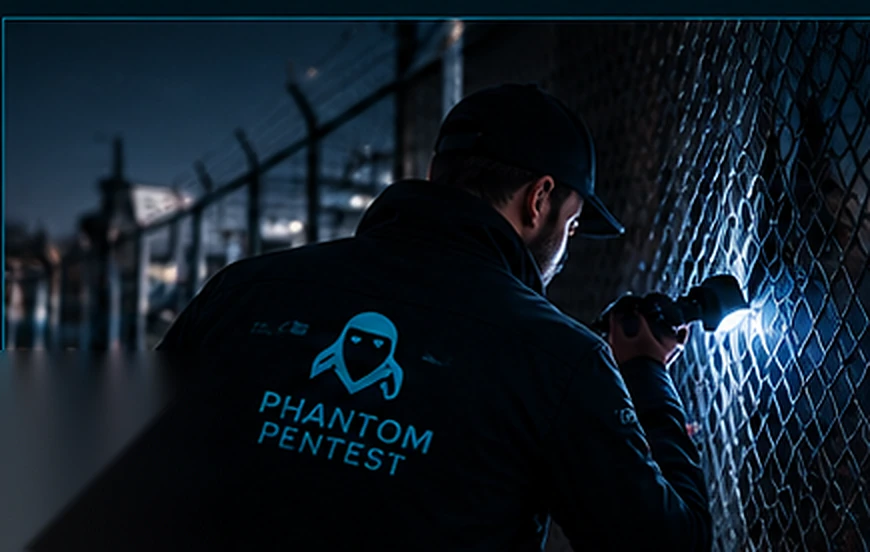
A controlled physical penetration test safely evaluates whether real-world security controls resist pre-approved adversarial scenarios—under written authorization and clear rules of engagement.
THE OBJECTIVE
A walkthrough can reveal visible issues; controlled testing can help validate whether combinations of entry controls, staff decisions and operational procedures hold up under realistic conditions. Phantom PenTest designs each engagement with the client around risk, operational constraints and explicit authorization.
Our findings focus on the interaction among people, processes, facilities and physical security technology. They explain why observed gaps matter and how the organization can respond.
ASSESSMENT SCOPE
Every engagement is tailored to the facility, the threats that matter and the boundaries the client authorizes.
Agree on permitted locations, windows, activities, contacts, exclusions and stop conditions before testing begins.
Select realistic, facility-relevant scenarios based on objectives, critical assets and approved methods.
Where authorized, evaluate entry checkpoints, visitor and contractor controls, escort procedures and response to unexpected access.
Document events and conditions objectively and within agreed privacy, safety and evidence-handling boundaries.
Assess whether the organization identifies, validates, escalates and responds to the agreed test activity.
Provide decision-ready findings, supporting evidence and recommendations—without unnecessarily disclosing sensitive details publicly.
WHY IT MATTERS
These examples illustrate common physical security challenges. They are not findings from an actual Phantom client assessment.
A single weak handoff may matter far more when paired with an adjacent control failure.
A procedure may exist without timely detection, validation, communication or intervention.
Testing can expose the difference between documented control design and observed operational behavior.
THE PENETRATE360 ADVANTAGE
Penetrate360 is Phantom PenTest’s proprietary visual assessment platform. It helps turn complex facility conditions, security assets and threat scenarios into a clearer understanding of risk—so leadership can see where to focus improvements.
Discover Penetrate360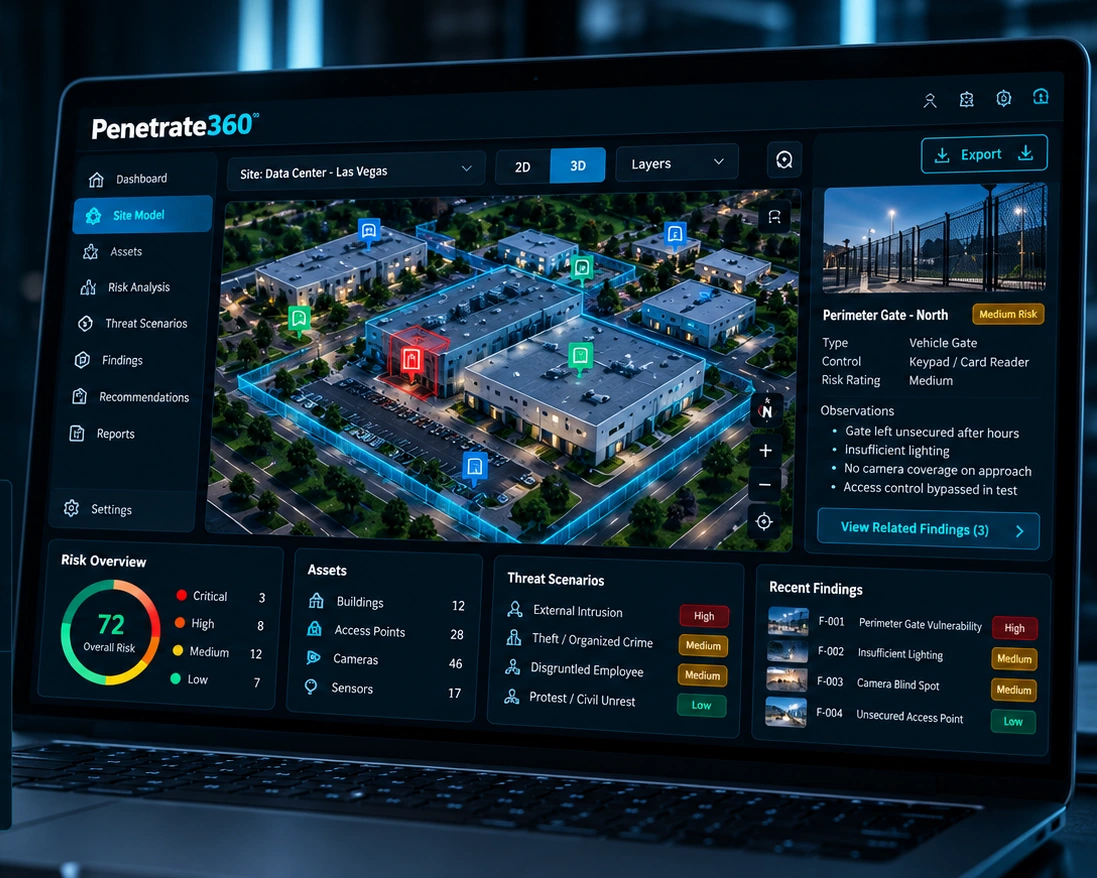
YOUR OUTCOME
A realistic, documented assessment of how agreed protective measures performed, with risk-ranked findings, leadership discussion and an actionable remediation roadmap.
COMMON QUESTIONS
Testing is conducted only with documented client authorization, a mutually agreed scope and explicit rules of engagement. Phantom does not conduct unauthorized entry or activity.
Engagements are designed with site stakeholders to minimize disruption and respect safety, privacy and operational restrictions; some activities may be excluded.
No. Our work focuses on physical access, procedures and facility security. Network or application penetration testing is outside Phantom PenTest’s service scope.
START WITH A CONVERSATION
Tell us about your security objectives. We’ll discuss an appropriate, confidential scope before any testing begins.